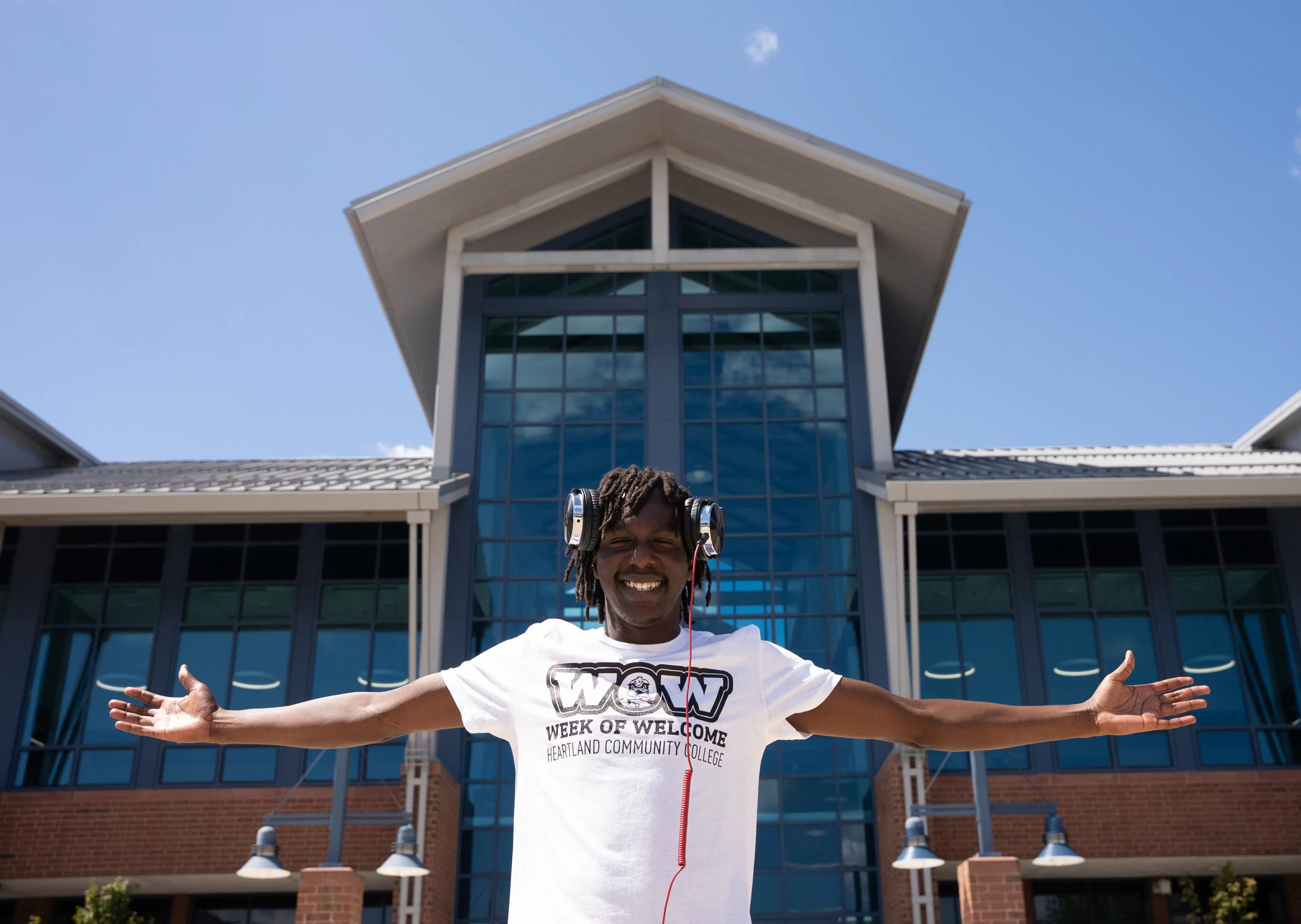
Image of student trustee, Aeman Lopeyok in front of the Student Commons Building on Heartland's campus.
Living in an environment of poverty, congestion, and uncertainty in Kenya, Aemun Lopeyok’s parents wanted their children to connect with a better life. 

Aemun says he spent most of his childhood playing soccer, grazing the family’s animals, and listening to music in the city of Nanyuki. He is also open about his family living in a slum.


His parents stressed the importance of education to him and his four sisters. They felt that education was the pathway to a better life for their children and stressed that they work hard on their studies when they had the opportunity.


Aemun’s father, a Christian scientist, urged his son to pursue his education through an avenue he learned about at his church. Aemun was able to enroll at a private Christian Science college in southern Illinois.


The transition proved harder than Aemun expected. He struggled with culture shock and felt severely out of place. He struggled academically and was not finding what he needed to progress. If he could not progress in college, he had few other options, including a place to live.


“It was the most vulnerable time of my life, emotionally, psychologically, and physically. In the eyes of my countrymen, I was a failure because they couldn’t understand why I had wasted a good opportunity,” Aemun said.


While contemplating his future, he visited a friend who lived in Bloomington-Normal. Aemun did not know what the next step was, only that he had to do something.


“I felt defeated. It was the first time in my life that I asked myself the question, ‘Who am I?’ I took walks on the Constitution Trail, trying to contemplate what life expected of me and what it was going to offer, if it was going to offer anything. I felt powerless.”


His friend suggested that he visit Heartland Community College and explore it as an option.


Aemun met with Gwen Lee, the Associate Director of International Programs. Gwen helped Aemun with the transfer process, and two weeks later, he began his career as a Heartland student.


At Heartland, Aemun found something that turned the switch for his academic career: he felt he was where he was supposed to be. He dug into his Computer Science courses and became more confident with speaking English, his fourth language.

Artboard 1
“Heartland gave me a sense of belonging and a place to learn, express myself, and thrive.”
Artboard 2

- Aemun Lopeyok

Student Trustee

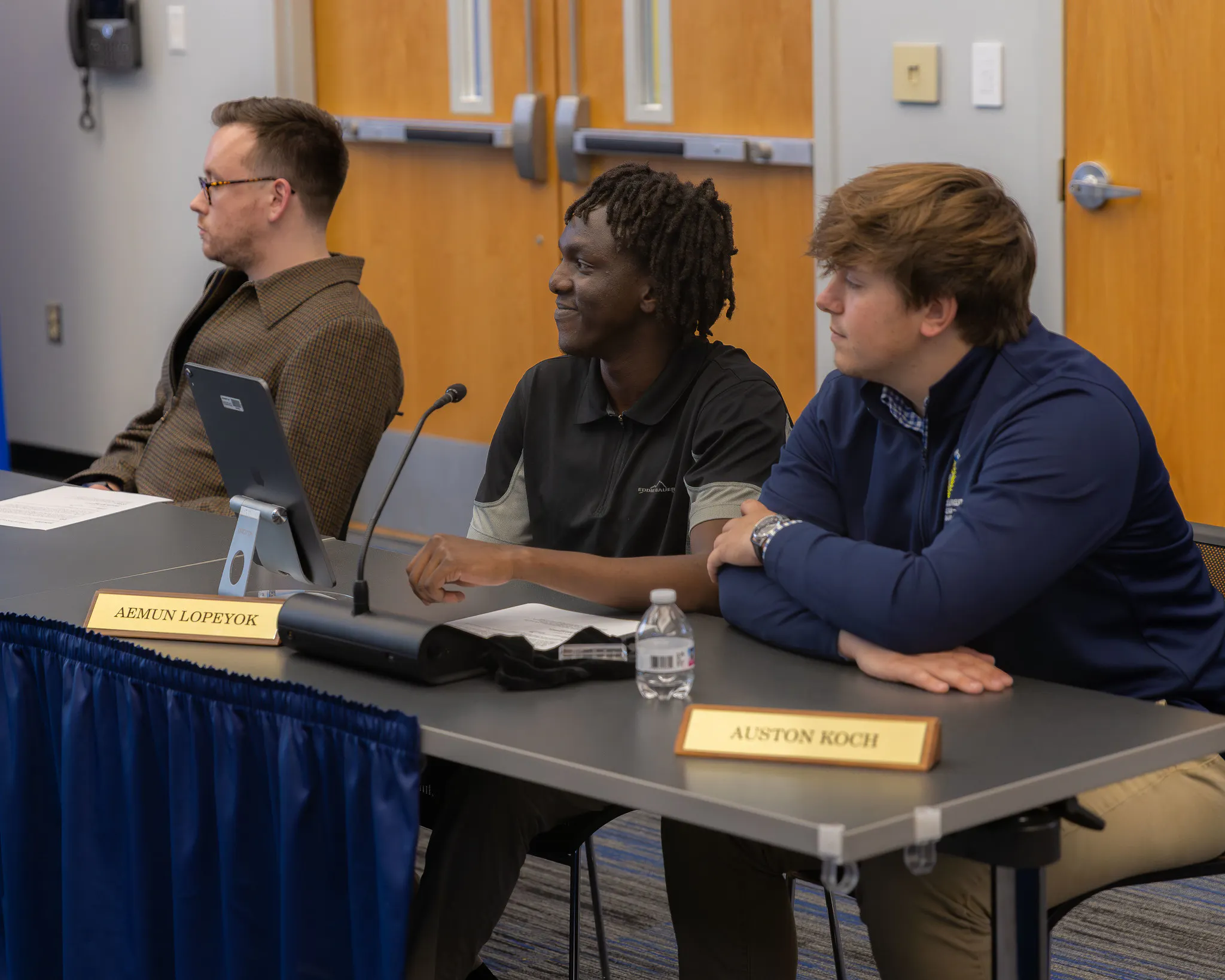
Image from a Heartland Board of Trustee meeting, showing trustee Josh Crockett, student trustee Aeman Lopeyok and former student trustee, Auston Koch.

Aemun found a job in the Student Engagement office and saw how the non-academic offerings helped create an environment to support students.


After a short period of time, he applied to serve on the Student Activities Committee. And after finding his place there, he applied to become an officer with the Student Government Association (SGA).

“I have all sisters and they were all leaders in the schools they went to. My dad is still a leader. My family always told me, ‘You know you have leadership qualities.’ But I was never interested in any leadership until I came to Heartland. I met great people here. And I had a thought, ‘how about I try this thing called leadership,” Aemun said.


After serving as President of the SGA, he became Heartland’s Student Trustee, representing students on the Heartland District 540 Board. He has a true passion for sharing the resources that have made an impact on his life.


“Heartland is my second home, and I would like to have more students feel the same way about the institution,” Aemun said. “I would like to provide students with the proper resources, awareness, and well-rounded experiences.”


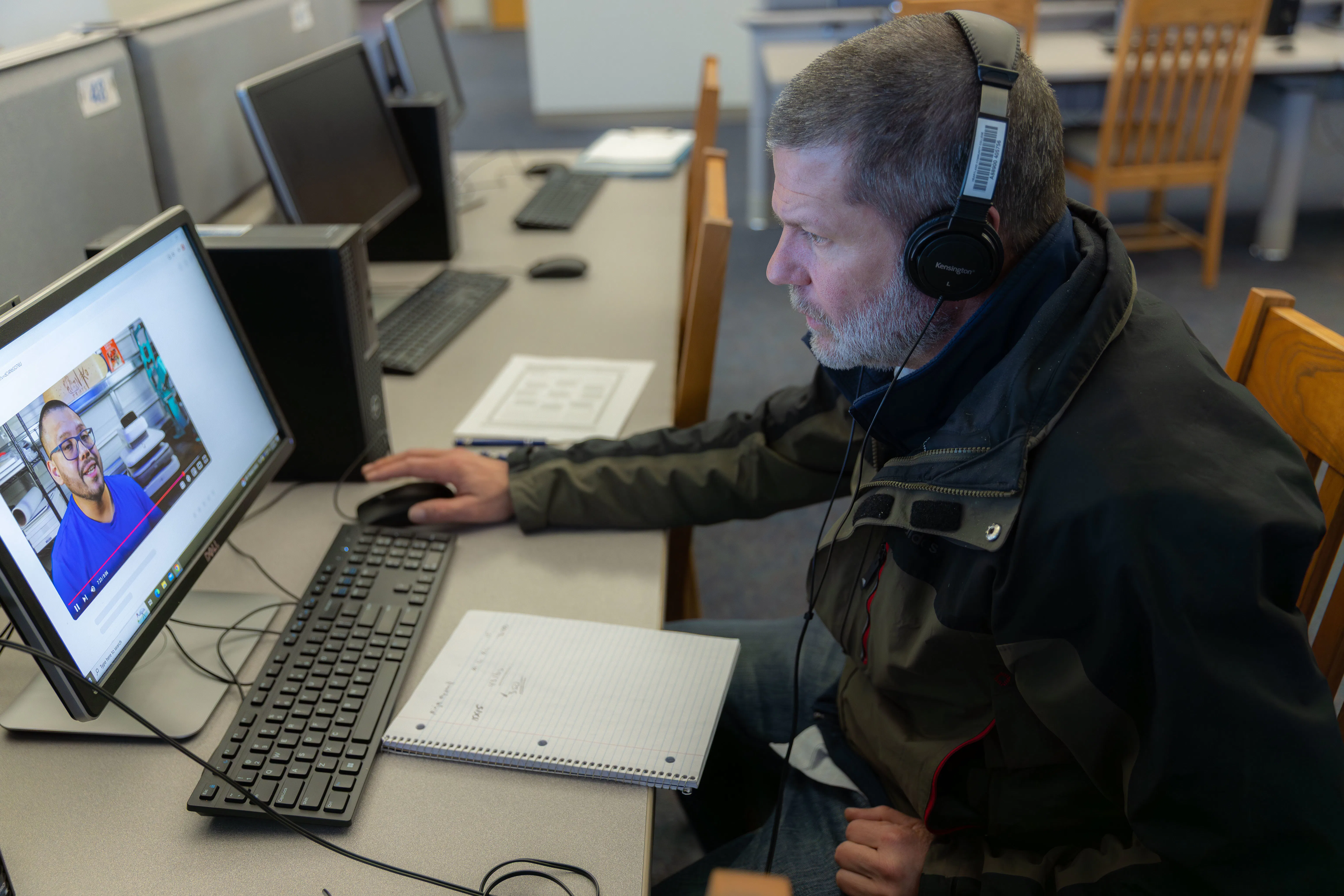
Image of student working at a computer wearing headphones

As with many opportunities, online instruction can also come with complications.


“Online courses can be isolating and challenging, so I want to take efforts to make sure that students are more successful and efficient,” said Heartland Distinguished Professor of English and Literature Stephanie Kratz.


Kratz has developed one of eight Heartland courses to receive the Quality Matters designation.


Quality Matters is a non-profit organization that has a team of trained experts who review online and hybrid courses on activities, learning objectives, opportunities for student collaboration, student engagement, and accessibility. The organization uses a rigorous research-based process that ensures the course aligns with essential rubric standards for the certification. The rubric is a self-review tool and allows faculty to self-access the course through evaluations and peer reviews.


The process to develop a course for Quality Matters (QM) standards is no small task. To receive the Quality Matters Certification Mark, Kratz’s ENG 101: Critical Reading and Writing course had to pass a rigorous review.


“There were forty-four different criteria for the course to meet. All of the criteria needed to work together. Some criteria were small, and some were bigger, but it helps in meeting the course learning outcomes,” said Kratz.


The COMM 101: Introduction to Oral Communication course developed by Amanda Frioli received the QM certification late last year.


In developing the online course, she worked to minimize barriers students may face in fully engaging with the curriculum. Utilizing closed-captioning in micro lectures, having on-camera pre-recorded lectures, and providing flexibility for the ways students demonstrate their knowledge all enhanced accessibility and ensured that all learners can actively participate and succeed.

Quality Matters logo

“This process made me examine every element of my course, from each click to content, ensuring it fosters a community-centered learning environment,” said Frioli. “This is especially crucial in an online classroom, as it ensures clarity and helps learners feel connected and engaged, regardless of the course format.”


Courses that receive the Quality Matters Certification Mark have met standards of 85% quality levels or higher in the review process. This symbol is recognized for three to five years and can be extended for an additional three years after recertification.

“The Quality Matters Official Review sets internationally-recognized standards and best practices to examine critical course components related to the learner experience and ultimately learner success,” said Sarah Diel-Hunt, Interim Provost and Vice President of Academic and Student Affairs.


“It is a testament to the dedication of our faculty and staff that we have numerous courses that achieved this high level of distinction for online course quality. And, across all disciplines and modalities of instruction, we have exceptional faculty who are committed to finding innovative and effective ways to help our students learn.”

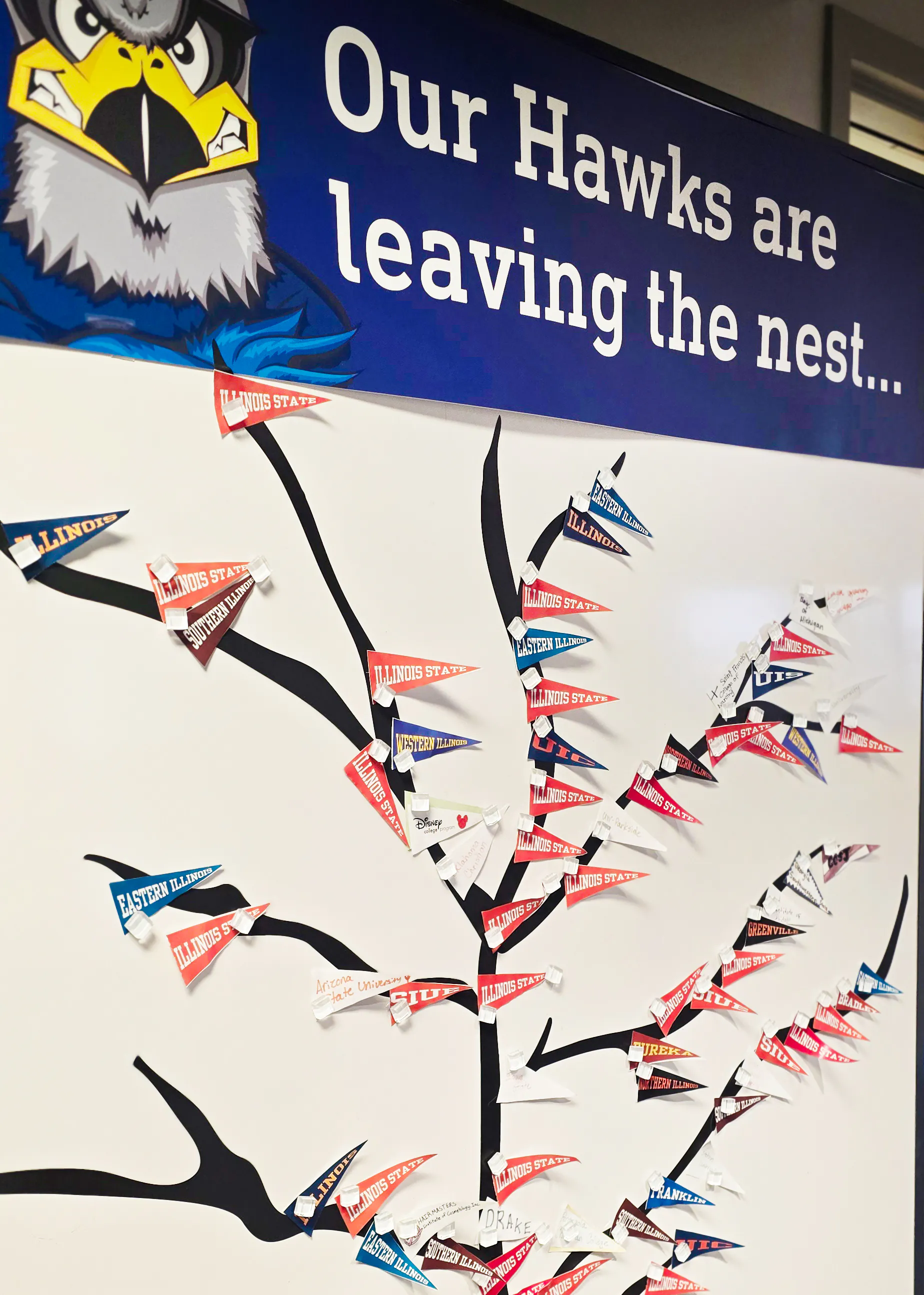
Image showing what colleges Heartland students have transferred to
Heartland Community College has had tremendous success offering equitable pathways for those seeking a transfer degree to a 4-year institution.


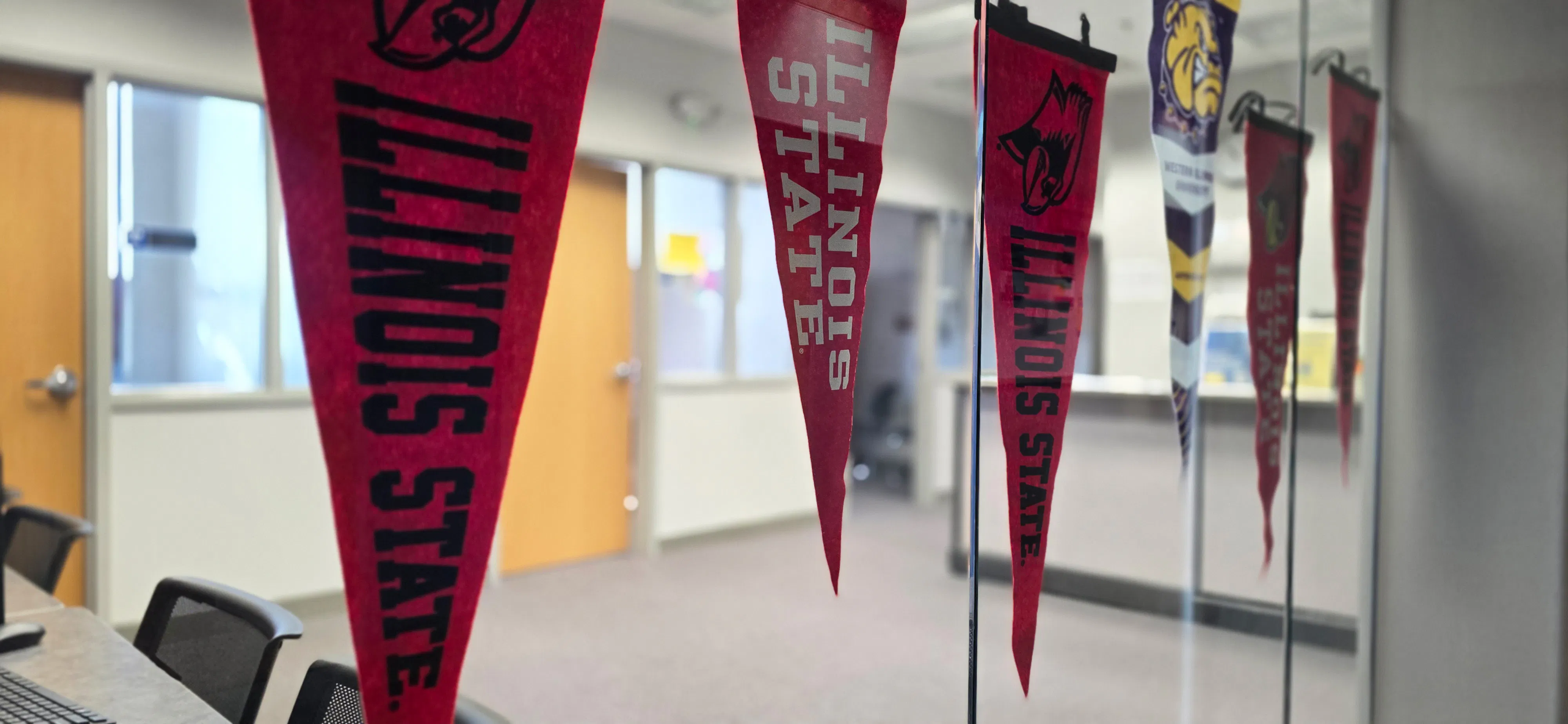
Heartland has dozens of transfer agreements with universities and colleges throughout the United States. Among those are relationships with every 4-year public institution in the state, including the University of Illinois, Western Illinois, Eastern Illinois, Southern Illinois at both Edwardsville and Carbondale, and of course, Illinois Wesleyan and Illinois State.


Transfer advisors and staff strive to make the transition from Heartland to these universities as seamless as possible.


In the 2024-2025 academic year, two new agreements were signed to add even more options for students. One, a pathway to a Business Degree with Illinois State, is designed to help working learners whose schedules might not align with regular class schedules. Another, with Millikin University, is designed to offer guaranteed admission for students seeking 19 Bachelor of Arts degree pathways.


Image of Heartland student Daniel Johnson, competing at the 2025 Special Olympic Winter Games in Turin, Italy.
In March of 2025, Daniel Johnson rapidly trudged 400 meters across a snowy landscape in Turin, Italy, outpacing competitors from around the world with a finishing time of 1:40.56. His prize: a silver medal in the Special Olympics World Winter Games.

As a member of the USA Special Olympics Team, Daniel competed in the 400-meter, 800-meter, and 4×100-meter snowshoeing events at the games, competing with 1,500 other athletes from 103 countries.


“I was so excited to be chosen to go to the World Winter Games!” Daniel said. “I broke my foot five months before the games and had to work very hard to be ready for competition. When it was finally time, I was so happy to be in Italy with all my teammates. It was a dream come true. The other part of my dream was to win a medal.”


The achievement is even more impressive considering the adversity Daniel faced, battling not only to recover from the broken foot, but also illness when he landed in Turin.


“I got a sinus infection the week the games started, and didn't medal in my first 2 races,” said Daniel, leaving out still-impressive finishes of 4th in the 800-meter and 5th in the 4x100-meter.

Artboard 1
“On the last day, in my last race, I came from behind and won silver at the finish line. It was amazing! I know with hard work and determination, I can accomplish anything.”
Artboard 2

- Daniel Johnson

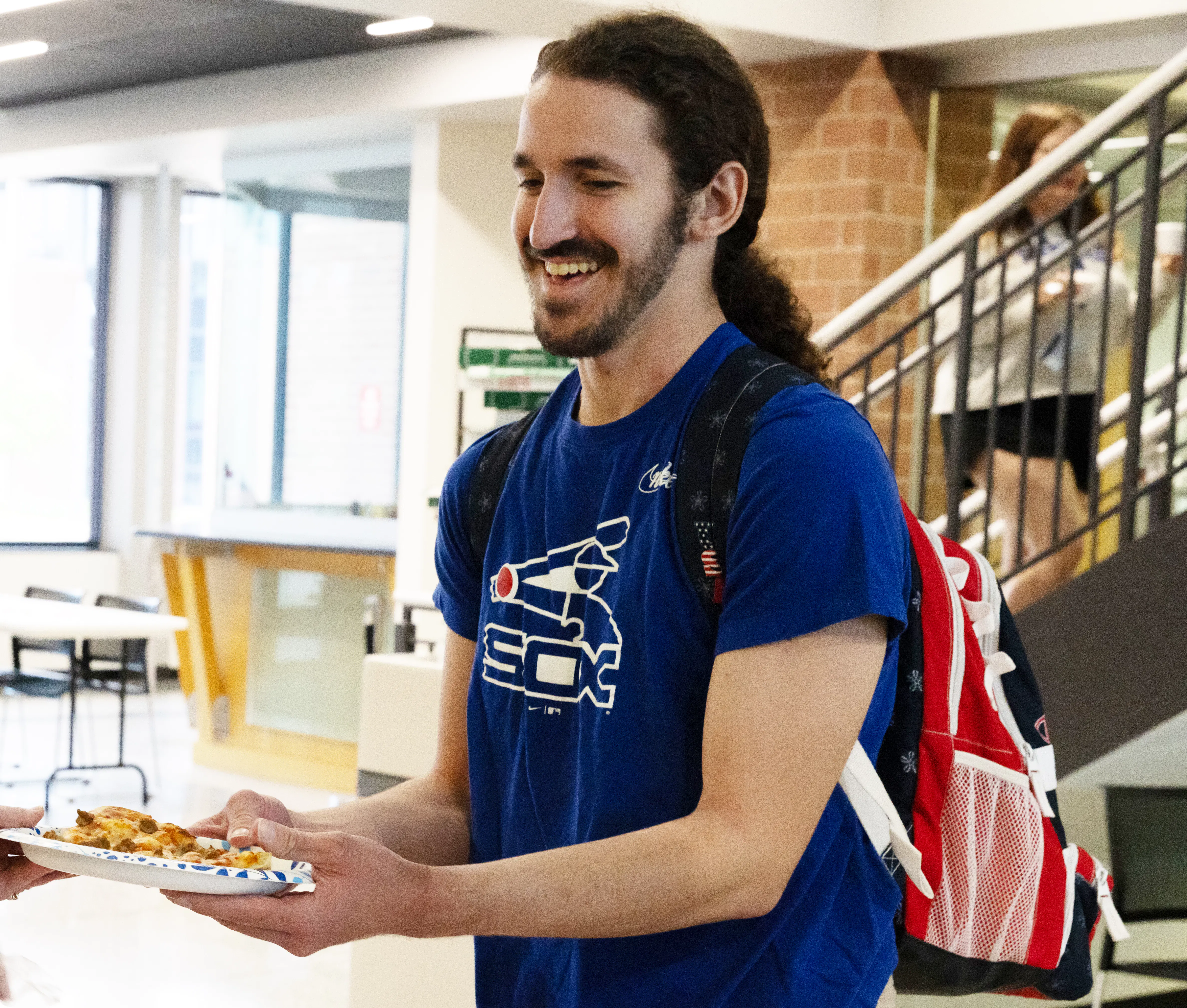
Image of Daniel Johnson smiling and receiving a piece of pizza at a Heartland event.

A graduate of Normal Community High School, Daniel competed in the games during his Expansion Year of the Heartland Academy for Learning Opportunities (HALO) program. HALO offers a higher education experience for students aged 18-28 with intellectual and/or developmental disabilities, as well as other learning challenges. This program allows students to experience college while developing indispensable life skills such as independence, time management, responsibility, self-advocacy, and more.


In 2023, with funding from a state Innovative Bridge and Transition Grant, the HALO Program launched an Expansion Year. This year-long experience assists students in transitioning into college or the workforce with the support of their peers and instructors.


Students engage in experiential activities alongside their coursework to identify their future goals, whether that be college credit courses, certificate offerings, or working towards gainful employment. In Daniel’s case, he was able to get a jump start on college-level credit courses.


“I started taking credit courses in my second year of HALO,” Daniel said. “HALO personnel helped me choose the right classes and plan my schedule. Being part of HALO made me comfortable with being on campus. I knew where to go. I also knew how to get accommodations.”


Daniel began taking a full schedule of college classes at Heartland in the Fall ‘25 term.

As with his HALO experience, Daniel is finding support to help him succeed, now with the Project RISE program.


“I knew about Project RISE because of HALO. Project RISE helps me in mentoring and tutoring.”


Project RISE is an educational support program funded by the U.S. Department of Education. Students are eligible for Project RISE if they are a first-generation college student, have a limited income, or have a disability.


In addition to tutoring, career exploration, and workshops, Project RISE students can connect with peer mentors who have benefited from the program. The wrap-around services connect to what many students say help them succeed academically and create a sense of belonging at the College.


As with HALO, these programs reflect what Daniel says is his favorite part of Heartland: “Meeting new people, making friends, hanging out with my friends, and learning new things.”